What is AI as a Service (AIaaS)? A Plain-English Guide
How businesses access powerful AI capabilities through subscriptions and APIs, without building AI systems from scratch.
Introduction
Most organizations want to benefit from artificial intelligence but do not want the cost, complexity, and risk of building AI systems from scratch. Hiring specialized talent, managing infrastructure, training models, and maintaining AI environments can be expensive and time-consuming.
This is one reason AI as a Service (AIaaS) has become increasingly popular.
Just as businesses consume software through SaaS platforms and computing resources through cloud services, they can now access AI capabilities through subscription-based services, APIs, and managed platforms. AIaaS allows organizations to use advanced AI technologies without becoming AI development companies themselves.
For business leaders evaluating AI opportunities, understanding AIaaS is often the first step toward practical AI adoption.
What Is AI as a Service (AIaaS)?
AI capabilities, delivered like a cloud service
AI as a Service (AIaaS) is a cloud-based delivery model that enables organizations to access artificial intelligence capabilities through subscription services, APIs, or managed platforms instead of building and maintaining AI infrastructure internally.
AIaaS providers manage the underlying AI models, computing resources, software updates, security controls, and maintenance activities. Businesses simply consume the AI capabilities they need and pay based on usage, subscriptions, or service agreements.
Common AIaaS offerings include Generative AI, AI chatbots, AI agents, machine learning platforms, computer vision systems, and AI analytics solutions.
AI as a Service in One Simple Example
Think about electricity.
Most companies do not build their own power plants. They simply purchase electricity when they need it.
AIaaS works similarly.
Instead of building AI infrastructure, hiring large AI teams, and maintaining models internally, organizations access AI capabilities when needed through a service provider.
Other simple analogies include:
- Owning servers versus using cloud computing.
- Building a private transportation fleet versus using a logistics provider.
- Creating custom software from scratch versus subscribing to SaaS platforms.
The goal is access to outcomes rather than ownership of infrastructure.
In simple terms, AIaaS allows organizations to use powerful AI technologies without the cost and complexity of developing everything themselves.
Why AIaaS Is Growing So Quickly
Several business factors are driving AIaaS adoption
Lower Barriers to Entry
Organizations can start using AI without significant technical investments.
Faster Deployment
Many AIaaS solutions can be implemented in weeks rather than months.
Reduced Upfront Investment
Businesses avoid large infrastructure and development costs.
Access to Advanced AI
Organizations gain access to sophisticated models that would otherwise be difficult to build internally.
Scalability
AI capabilities can expand as business needs grow.
Faster Innovation
Providers continuously improve services, giving customers access to new capabilities.
How AI as a Service Works
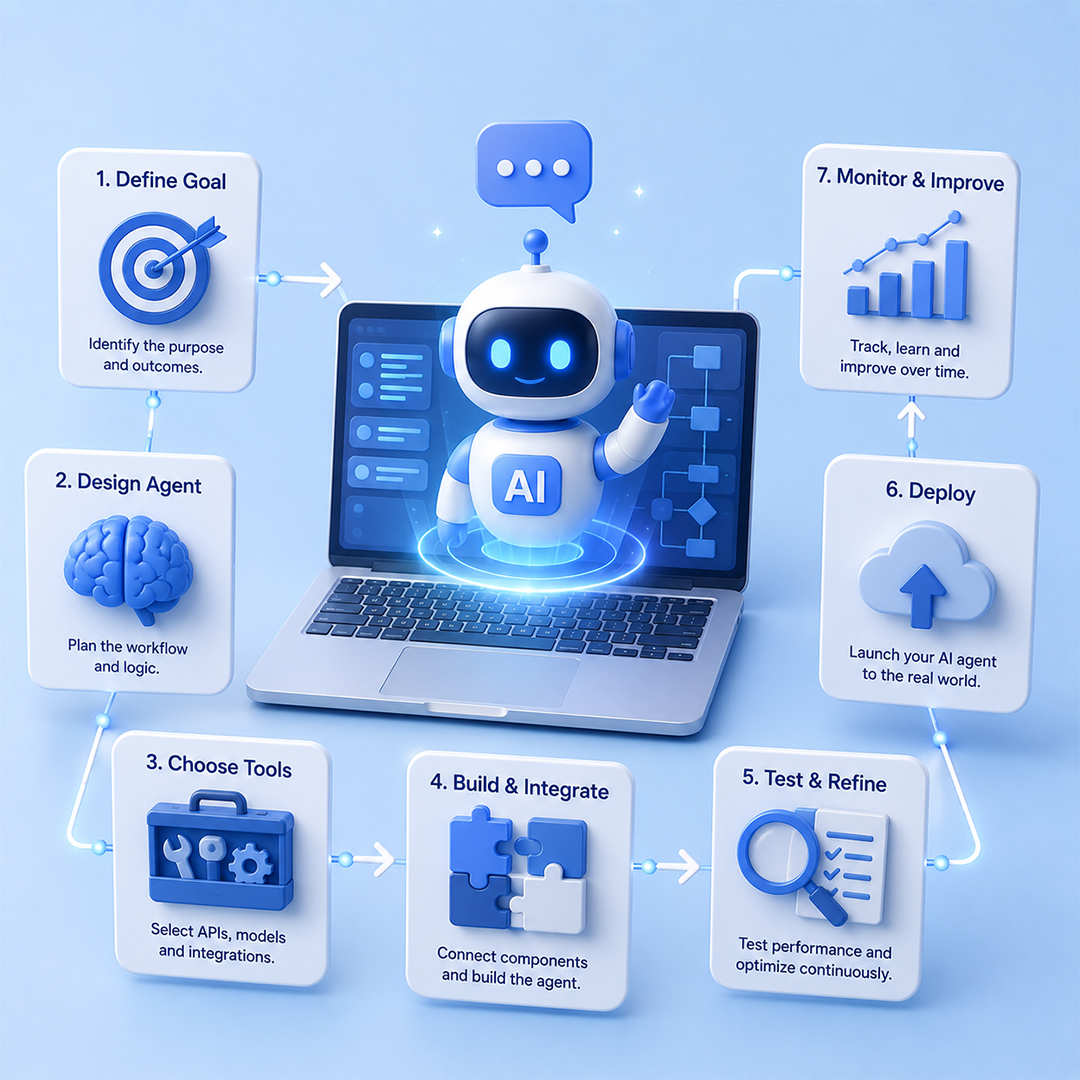
A typical AIaaS implementation follows a simple process
1. Business Identifies a Use Case
Examples include customer support, document processing, or content creation.
2. AI Service Is Selected
The organization chooses an AIaaS provider aligned with its goals.
3. Data Is Connected
Relevant business data and systems are integrated.
4. AI Models Process Information
The platform analyzes data and generates outputs.
5. Results Are Delivered
Insights, recommendations, content, or actions are provided.
6. Usage Is Monitored and Optimized
Performance is tracked and improved over time.
For example, a customer support team might connect a chatbot service to its knowledge base and begin answering customer questions within days.
The Different Types of AIaaS
Six categories of AI delivered as a service
Generative AI Services
These services create content, summaries, code, reports, and recommendations. Organizations use them to improve productivity and accelerate knowledge work.
AI Chatbot Services
AI chatbots help businesses automate customer interactions, support requests, and information retrieval through conversational interfaces.
AI Agent Services
AI agents go beyond answering questions by performing tasks, interacting with systems, and executing workflows with varying levels of autonomy.
Machine Learning Services
These platforms help organizations build predictive models for forecasting, recommendations, fraud detection, and decision support.
Computer Vision Services
Computer vision solutions analyze images and videos for applications such as quality control, security monitoring, and document processing.
AI Analytics Services
AI analytics platforms identify patterns, generate insights, and support business decision-making through advanced data analysis.
AIaaS vs Traditional Software
How the two delivery models compare
| Area | Traditional Software | AI as a Service |
|---|---|---|
| Deployment | Installed or configured | Cloud-based access |
| Updates | Scheduled releases | Continuous improvements |
| Scalability | Often limited | Highly scalable |
| Learning Capability | Fixed functionality | Learns and adapts |
| Customization | Configuration-based | Data-driven optimization |
| Maintenance | Customer responsibility | Provider responsibility |
| Infrastructure Requirements | Higher | Minimal |
| Business Agility | Moderate | High |
| Cost Structure | License-based | Subscription or usage-based |
| Innovation Speed | Slower | Faster |
AIaaS vs Custom AI Development
Weighing the trade-offs of each approach
Advantages of AIaaS
- Faster implementation
- Lower initial investment
- Reduced technical complexity
- Access to advanced capabilities
- Easier scalability
Limitations of AIaaS
- Less customization
- Potential vendor dependency
- Limited control over underlying models
Advantages of Custom AI Development
- Complete control
- Tailored functionality
- Competitive differentiation
- Greater flexibility
Limitations of Custom AI Development
- Higher cost
- Longer timelines
- Greater technical requirements
- Ongoing maintenance responsibilities
Organizations should choose based on business goals, resources, and strategic priorities.
Real-World AIaaS Use Cases
Where organizations are putting AIaaS to work
Customer Service
Businesses use AI chatbots and virtual assistants to handle customer inquiries, reduce response times, and improve service availability.
Marketing & Content Creation
Generative AI services help create content, summarize research, generate campaign ideas, and accelerate marketing workflows.
Sales Operations
AI systems assist with lead qualification, forecasting, customer insights, and sales productivity.
Internal Knowledge Management
Organizations deploy AI-powered knowledge assistants that help employees find information quickly.
Business Process Automation
AI agents and automation platforms streamline repetitive workflows, approvals, and operational processes.
Benefits of AI as a Service
Six reasons businesses are adopting AIaaS
These benefits make AIaaS attractive for organizations seeking practical and manageable AI adoption.
Common Misconceptions About AIaaS
Setting the record straight
AIaaS Is Only for Large Enterprises
Many AIaaS solutions are specifically designed for small and mid-sized organizations.
AIaaS Eliminates the Need for Strategy
Technology alone does not guarantee outcomes. Business objectives remain essential.
AIaaS Is Always Cheaper
Long-term costs depend on usage patterns and business requirements.
AIaaS Is Only for Generative AI
AIaaS includes machine learning, computer vision, analytics, chatbots, and AI agents.
AIaaS Requires No Governance
Organizations still need oversight, security controls, and responsible AI practices.
How to Evaluate an AIaaS Provider
Eight criteria to guide your selection
1. Security & Compliance
Ensure appropriate controls protect sensitive business data.
2. AI Capabilities
Evaluate whether the platform supports current and future requirements.
3. Scalability
Confirm the service can grow with business demand.
4. Integration Options
Assess compatibility with existing systems and workflows.
5. Support & Service Levels
Review support models, responsiveness, and service commitments.
6. Governance Features
Look for monitoring, auditing, and responsible AI controls.
7. Pricing Transparency
Understand usage fees, subscriptions, and scaling costs.
8. Industry Expertise
Evaluate experience within your industry and business environment.
Is AIaaS Right for Your Business?
Two quick checklists to guide the decision
AIaaS Is Often a Good Fit If:
- Rapid deployment is important.
- Internal AI expertise is limited.
- Budgets are constrained.
- Standard AI capabilities are sufficient.
- Scalability is required.
Custom Development May Be Better If:
- Highly specialized requirements exist.
- Proprietary intellectual property is critical.
- Competitive differentiation depends on unique AI capabilities.
- Extensive customization is required.
- Long-term AI ownership is a strategic priority.
What to Expect in 2026 and Beyond
The AIaaS market is expected to evolve toward:
Businesses will increasingly consume AI as an operational service rather than a standalone technology project.
Frequently Asked Questions
Common questions about AI as a Service
What is AI as a Service?
AI as a Service is a cloud-based model that provides organizations access to AI capabilities through subscriptions, APIs, or managed platforms instead of building AI systems internally.
How does AIaaS work?
Businesses connect their data and workflows to AI services provided by third-party platforms. The provider manages infrastructure, models, updates, and maintenance.
What are examples of AIaaS?
Examples include Generative AI platforms, AI chatbots, AI agents, machine learning services, computer vision systems, and AI analytics platforms.
Is AIaaS different from SaaS?
Yes. SaaS delivers software applications, while AIaaS delivers AI capabilities such as prediction, content generation, automation, and decision support.
Is AIaaS suitable for small businesses?
Yes. Many AIaaS offerings are designed to help smaller organizations access enterprise-grade AI capabilities without large investments.
How much does AIaaS cost?
Costs vary by provider, usage volume, functionality, and service model. Many offerings use subscription-based or consumption-based pricing.
Is AIaaS secure?
Most providers offer enterprise-grade security features, but organizations should still evaluate governance, compliance, and data protection requirements carefully.
When should businesses choose AIaaS instead of custom AI?
AIaaS is often the better option when speed, cost efficiency, scalability, and ease of implementation are higher priorities than full customization.
Conclusion
AI as a Service has made artificial intelligence significantly more accessible for organizations of all sizes.
By providing cloud-based access to advanced AI capabilities, AIaaS reduces implementation complexity, lowers upfront costs, and accelerates adoption. While custom development remains valuable for highly specialized needs, AIaaS offers a practical path for most businesses seeking measurable AI outcomes. The key is aligning technology choices with business objectives, operational requirements, and long-term strategic goals.
As organizations look for faster and more practical ways to adopt AI, AI as a Service has become an increasingly attractive option.
Kambaa helps businesses evaluate, implement, govern, and scale AIaaS solutions across customer service, automation, AI agents, knowledge management, and enterprise transformation initiatives.