
How AI Overviews Changed Search: Original Research + 2026 Data
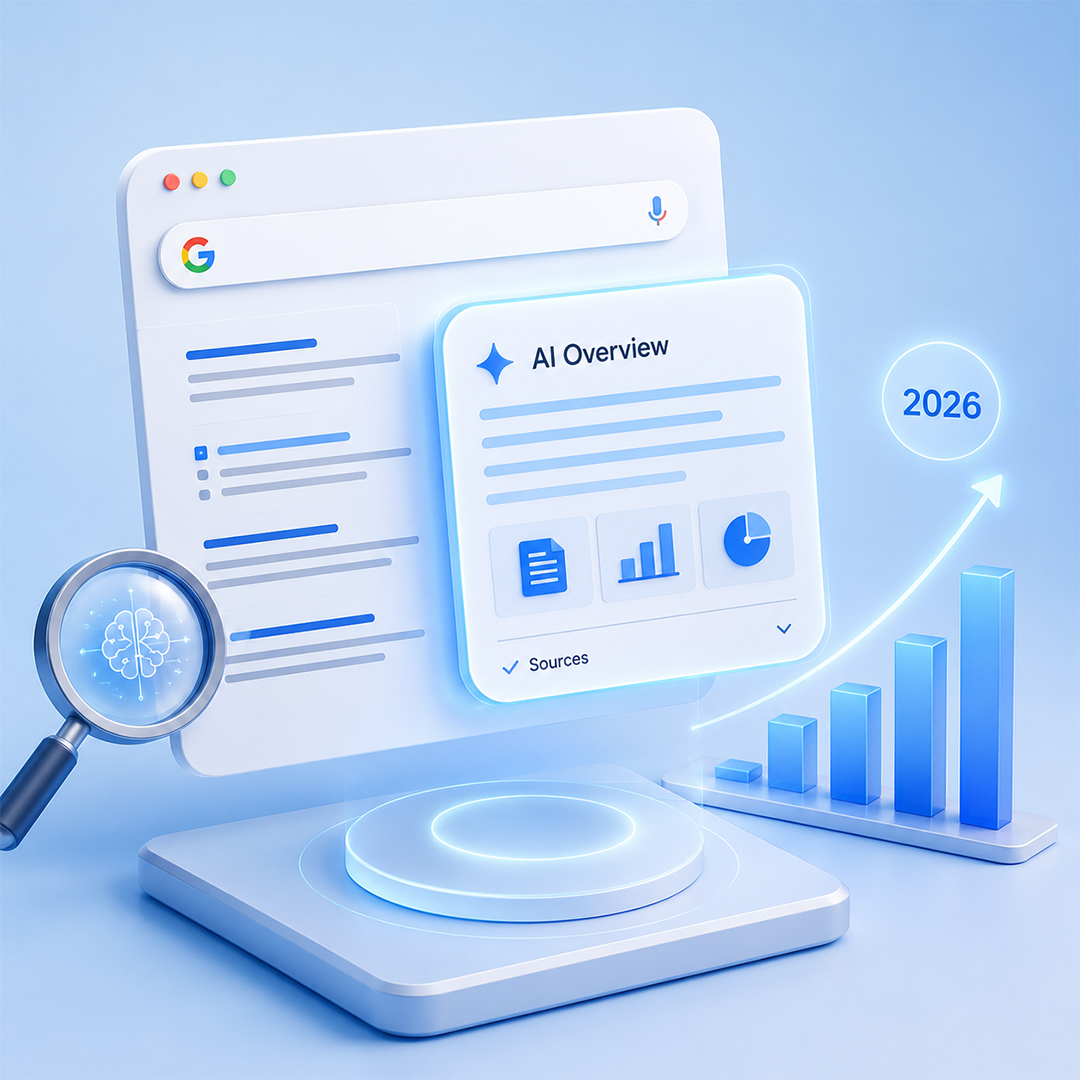
Google AI Overviews represent one of the most significant changes to search since the rise of mobile search. This report synthesizes industry observations, public research, expert analysis, and emerging search trends.
Introduction
Google AI Overviews represent one of the most significant changes to search since the rise of mobile search. For more than two decades, search engines primarily functioned as discovery platforms that connected users with webpages through ranked results. Today, Google increasingly generates answers directly within search results through AI-generated summaries that synthesize information from multiple sources.
This shift is changing how users discover information, evaluate brands, and make purchasing decisions. It is also changing how marketers think about visibility.
Traditional rankings still matter, but organizations now compete for inclusion within AI-generated answers, citations, and recommendations. As a result, AI Overview SEO has emerged as a critical area of focus for businesses seeking visibility in an increasingly AI-driven search environment.
This report synthesizes industry observations, public research, expert analysis, and emerging search trends to explore how AI Overviews are reshaping search in 2026.
Executive summary
Key findings from industry observations and public analyses
- AI Overviews are shifting search behavior from keyword matching toward conversational information discovery.
- Visibility increasingly depends on authority, expertise, and content extractability rather than rankings alone.
- Structured content formats such as definitions, FAQs, frameworks, and summaries appear particularly well-suited for AI-generated answers.
- Entity recognition and brand authority are becoming more important as AI systems evaluate source credibility.
- Zero-click search behavior appears to be increasing for informational queries, although website traffic remains important for deeper research and conversion activities.
- AI Overview optimization builds on traditional SEO rather than replacing it.
What are Google AI Overviews?
AI-generated summaries embedded directly in search results
Google AI Overviews are AI-generated summaries that appear directly within search results and provide synthesized answers to user queries. Rather than displaying only a list of links, Google uses generative AI to combine information from multiple sources and present a concise response within the search experience. Users can then explore supporting sources, follow-up questions, and related information.
How they differ from traditional results
AI Overviews differ from traditional search results because they prioritize answer generation rather than link presentation. While organic rankings remain important, visibility increasingly depends on whether content is selected as part of Google's synthesized response.
How search worked before AI Overviews
A relatively predictable pattern
Before AI Overviews, search behavior followed a relatively predictable pattern. Users entered keywords, reviewed a list of results, and clicked through to websites to find answers. Success depended heavily on securing positions near the top of search engine results pages (SERPs).
While featured snippets provided limited direct answers, most discovery still relied on users visiting external websites. AI Overviews introduce a fundamentally different experience by delivering synthesized information before a click occurs.
Visibility was largely determined by:
- Organic rankings
- Featured snippets
- Rich results
- Click-through rates
- Search intent alignment
How AI Overviews changed search
Six shifts observed across the search experience
1. Search Became More Conversational
Users increasingly ask complete questions rather than entering fragmented keywords. AI-generated responses are designed to address broader intent and support more natural interactions.
Business impact: Content must address questions comprehensively rather than focusing exclusively on keyword variations.
2. Visibility Expanded Beyond Rankings
Ranking highly remains valuable, but inclusion within AI-generated answers has become another layer of visibility. Industry observations suggest that sources appearing within AI-generated summaries often gain exposure even when they are not the highest-ranked result.
Business impact: Visibility strategies must extend beyond traditional ranking targets.
3. Authority Became More Important
Across multiple analyses, authoritative sources appear more likely to be referenced within AI-generated summaries. Google increasingly evaluates expertise, credibility, and topical authority when generating responses.
Business impact: Brand authority is becoming a competitive advantage.
4. Structured Content Became More Valuable
Definitions, FAQs, comparison content, frameworks, and summaries are easier for AI systems to interpret and synthesize. Industry practitioners consistently report stronger AI visibility for well-structured content.
Business impact: Content formatting now plays a larger role in discoverability.
5. Zero-Click Behavior Increased
AI Overviews frequently answer informational queries directly within search results. Users may gather information without immediately visiting external websites.
Business impact: Organizations must measure visibility beyond traffic alone.
6. Brand Recognition Matters More
When users encounter brands repeatedly across AI-generated answers, recognition and trust tend to increase. Public research suggests that repeated visibility influences purchasing consideration even when users do not click immediately.
Business impact: Brand presence within AI ecosystems has become a meaningful visibility metric.
Industry findings and observations
Consistent themes across SEO, GEO, and content communities
Several consistent themes have emerged across SEO communities, GEO practitioners, content marketers, and public research analyses.
Growth of AI-Generated Summaries
AI-generated answers are becoming a more prominent component of the search experience.
Increased Importance of Entity Authority
Organizations with clearly defined expertise appear better positioned for AI visibility.
Greater Visibility for Authoritative Sources
Public analyses frequently highlight authority as a recurring factor in AI-generated search results.
Content Strategy Priorities Are Evolving
More organizations are prioritizing FAQs, direct-answer content, comparison pages, and educational resources.
Visibility Metrics Are Expanding
Marketers increasingly track citations, mentions, and AI-generated visibility alongside rankings and traffic.
Taken together, these observations suggest that AI Overviews are influencing both search behavior and optimization priorities.
AI Overview SEO: what actually matters now
Eight factors, each with why it matters, observations, and implementation
Factor 1: Topical Authority
Why it matters: AI systems favor sources demonstrating expertise across a topic.
Industry observations: Comprehensive content ecosystems appear more visible than isolated pages.
Implementation: Build content clusters around core expertise areas.
Factor 2: Entity Recognition
Why it matters: AI systems evaluate organizations, products, and experts as entities.
Industry observations: Consistent entity information strengthens visibility.
Implementation: Standardize brand descriptions and expertise signals.
Factor 3: Direct Answer Content
Why it matters: AI systems need extractable answers.
Industry observations: Concise explanations frequently appear within summaries.
Implementation: Lead with direct answers before adding detail.
Factor 4: Content Structure
Why it matters: Structured information improves interpretation.
Industry observations: Headings, FAQs, and frameworks are commonly represented.
Implementation: Use clear content hierarchies.
Factor 5: E-E-A-T Signals
Why it matters: Experience and expertise influence trust.
Industry observations: Credible authors and authoritative sources remain important.
Implementation: Highlight expertise and author credentials.
Factor 6: Structured Data
Why it matters: Structured information improves machine understanding.
Industry observations: Schema supports entity clarity.
Implementation: Implement relevant structured data.
Factor 7: Freshness
Why it matters: Current information supports answer quality.
Industry observations: Updated content performs better for evolving topics.
Implementation: Refresh priority content regularly.
Factor 8: Third-Party Validation
Why it matters: External credibility strengthens trust.
Industry observations: Mentions and references reinforce authority.
Implementation: Earn industry citations and recognition.
Real-world implications for businesses
How different industries are affected
B2B Companies
Long buying cycles make AI-generated research increasingly influential. Visibility during the evaluation stage can shape vendor consideration.
SaaS Companies
Software buyers frequently compare solutions through AI-powered research experiences before requesting demos.
Ecommerce Brands
Product discovery remains important, but AI-generated comparisons and recommendations are becoming more common.
Professional Services Firms
Expertise and authority signals play a significant role in visibility for consulting, legal, financial, and advisory services.
Common misconceptions about AI Overviews
What AI Overviews are not
SEO Is Dead
Search remains important. AI Overviews expand search rather than replace it.
Rankings No Longer Matter
Rankings continue influencing discoverability and authority.
AI Overviews Replace Websites
Users still visit websites for detailed research, validation, and transactions.
Only Large Brands Can Appear
Smaller organizations can earn visibility through expertise and authority.
Schema Guarantees Inclusion
Structured data helps interpretation but does not guarantee visibility.
What organizations should do next
A four-phase approach to AI visibility
Phase 1: Audit Current Visibility
Assess rankings, AI Overview presence, citations, and authority signals.
Phase 2: Strengthen Authority Signals
Invest in expertise development, content quality, and thought leadership.
Phase 3: Improve Content Extractability
Create definitions, FAQs, comparisons, and structured educational resources.
Phase 4: Monitor AI Overview Presence
Track visibility trends across AI-generated search experiences.
Organizations that treat AI visibility as an ongoing discipline will be better positioned as search evolves.
What to expect in 2026 and beyond
Several trends likely to shape the future of AI-powered search
Expansion of AI-Generated Search
AI summaries will likely become a larger part of the search experience.
Entity-First Visibility
Organizations, expertise, and credibility will continue growing in importance.
Citation-Driven Discovery
Visibility will increasingly depend on references and recommendations.
GEO Growth
Generative Engine Optimization will mature into a core marketing discipline.
New Measurement Approaches
AI citations, mentions, and visibility metrics will complement traditional SEO reporting.
The future of search appears less focused on individual rankings and more focused on overall discoverability across multiple AI-driven experiences.
Frequently asked questions
Common questions about AI Overviews and search visibility
What is AI Overview SEO?
AI Overview SEO is the practice of optimizing content, authority signals, entities, and structure to improve visibility within Google AI Overviews and AI-generated search experiences.
How do AI Overviews affect rankings?
AI Overviews do not replace rankings, but they create an additional visibility layer. Content can gain exposure through AI-generated answers even when it is not the top-ranked result.
Do AI Overviews reduce website traffic?
The impact varies by query type. Informational searches may generate fewer clicks, while research-intensive topics can still drive significant traffic to authoritative sources.
What content appears in AI Overviews?
Industry observations suggest that structured, authoritative, well-organized content is more likely to contribute to AI-generated summaries.
How can businesses improve visibility?
Organizations should focus on authority, expertise, content quality, entity development, and structured information.
Is AI Overview optimization different from SEO?
Yes. AI Overview optimization expands traditional SEO by focusing on content extractability, authority signals, AI visibility, and citation potential.
Conclusion
Google AI Overviews represent one of the most significant shifts in search since the rise of mobile-first experiences.
The evidence emerging from industry observations suggests that authority, expertise, structured content, and entity recognition are becoming increasingly important. While traditional SEO remains essential, visibility is no longer determined solely by rankings.
Organizations that adapt early, strengthen authority signals, and optimize for AI-generated discovery will be better positioned as search continues evolving toward conversational, AI-powered experiences.
Want to strengthen your AI Overview visibility?
As AI-generated search experiences continue to evolve, organizations need strategies that improve visibility beyond traditional rankings. Kambaa helps businesses strengthen AI visibility through GEO strategy, AI citation optimization, content authority development, and AI search consulting.