
Generative AI for Banking: 12 Use Cases with Measurable ROI
Financial institutions generate enormous volumes of customer communications, compliance records, policies, transaction data, loan documents, and operational knowledge every day. As information complexity increases, generative AI for banking is emerging as a practical tool that helps banking teams create, summarize, analyze, and retrieve information more efficiently.
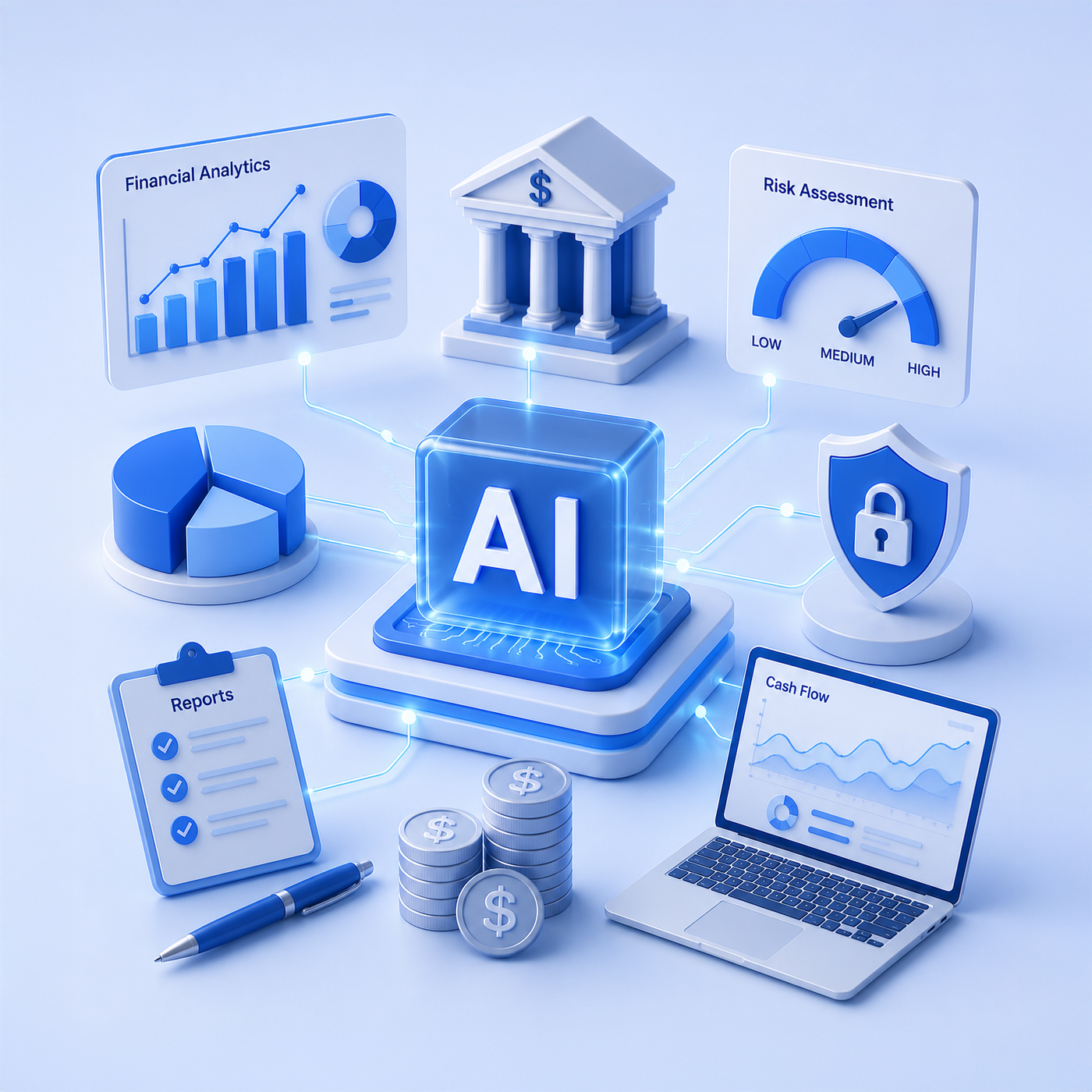
Rather than replacing bankers, compliance professionals, or operations teams, generative AI helps employees work faster, improve decision-making, and reduce administrative burdens while maintaining human oversight and governance.
What Is Generative AI for Banking?
Generative AI for banking refers to the use of large language models (LLMs) and related AI technologies to generate, summarize, analyze, transform, and retrieve banking-related information. Common applications include customer support, compliance documentation, policy search, knowledge management, document generation, employee assistance, and operational workflow support.
Unlike traditional automation systems that follow predefined rules, generative AI can understand context, interact through natural language, and assist employees with information-heavy tasks. Its primary role is to augment banking professionals by reducing manual information processing, improving access to institutional knowledge, and supporting faster, more informed decisions while maintaining appropriate human review and regulatory controls.
Why Banks Are Investing
Key business drivers include:
Many banks view generative AI as a productivity and information-management capability rather than a standalone technology project.
The 12 Highest-ROI Generative AI Use Cases in Banking
1. Customer Service Knowledge Assistants
Provides customer-facing teams with instant access to policies, product information, and procedures. ROI comes from reduced handling times and improved service consistency. Human agents validate responses before critical actions.
2. Internal Banking Knowledge Search
Allows employees to search internal documents using natural language. Reduces time spent locating information and improves employee productivity. Human review remains essential.
3. Compliance Documentation Support
Assists compliance teams in drafting reports, summaries, and documentation. ROI is driven by faster preparation and reduced manual effort.
4. KYC Documentation Processing
Summarizes customer onboarding documents and extracts relevant information. Improves onboarding efficiency while compliance teams retain approval authority.
5. AML Investigation Assistance
Helps investigators summarize suspicious activity records and supporting evidence. Reduces research time and supports more effective investigations.
6. Loan Application Summarization
Creates concise summaries of complex application packages. Supports underwriters without replacing human credit decisions.
7. Customer Communication Generation
Drafts emails, notices, and customer communications. Improves consistency and reduces administrative workloads.
8. Wealth Management Research Support
Summarizes market reports and research documents to help advisors prepare for client interactions.
9. Banking Contact Center Copilots
Provides real-time guidance during customer interactions. Improves agent productivity while maintaining human oversight.
10. Policy & Procedure Retrieval
Allows employees to quickly access operational policies and procedures using conversational search.
11. Regulatory Change Analysis
Summarizes regulatory updates and identifies affected business areas. Supports compliance teams in managing change.
12. Banking Operations Documentation
Automates creation of operational reports, process summaries, and internal documentation, reducing repetitive administrative work.
Generative AI ROI in Banking
| Use Case | Primary Value Driver | Typical Impact Area | ROI Measurement Approach |
|---|---|---|---|
| Customer Service | Productivity | Service Operations | Handle time reduction |
| Compliance | Documentation Efficiency | Risk & Compliance | Time savings |
| KYC | Faster Onboarding | Customer Operations | Processing speed |
| AML | Investigation Support | Compliance | Analyst productivity |
| Loan Processing | Faster Reviews | Lending | Cycle-time reduction |
| Knowledge Management | Information Access | Enterprise Operations | Employee efficiency |
| Contact Centers | Agent Assistance | Customer Experience | Resolution speed |
Which Banking Functions Benefit Most?
Retail Banking
Customer service, onboarding, support, and communication workflows.
Commercial Banking
Loan processing, documentation, relationship management, and compliance support.
Wealth Management
Research summarization, client preparation, and advisor productivity.
Risk & Compliance
Policy management, regulatory analysis, AML support, and reporting.
Operations & Shared Services
Knowledge management, documentation, and process optimization.
Real-World Scenarios
Example 1: Contact Center Productivity Improvement
Challenge: Long customer handling times.
Solution: AI-powered agent copilot.
Human Oversight: Agent validates recommendations.
Expected Outcome: Faster service and improved consistency.
Example 2: Compliance Documentation Automation
Challenge: Time-intensive report preparation.
Solution: AI-assisted document drafting.
Human Oversight: Compliance review before submission.
Expected Outcome: Reduced administrative effort.
Example 3: Loan Processing Support
Challenge: Reviewing lengthy applications.
Solution: Automated loan summaries.
Human Oversight: Underwriter retains decision authority.
Expected Outcome: Faster review cycles.
Example 4: Internal Knowledge Management
Challenge: Difficulty finding internal information.
Solution: Enterprise knowledge assistant.
Human Oversight: Employee validation.
Expected Outcome: Faster access to expertise.
Benefits
Faster Information Access
Employees locate information more quickly.
Reduced Administrative Work
Less time spent on repetitive documentation.
Improved Employee Productivity
Teams focus on higher-value activities.
Better Customer Experiences
Faster and more consistent service delivery.
Faster Compliance Processes
Supports reporting and documentation workflows.
Improved Knowledge Sharing
Institutional knowledge becomes easier to access.
Faster Decision Support
Relevant information is surfaced quickly.
Operational Efficiency Improvements
Processes become more streamlined and scalable.
Risks and Challenges
1. Hallucinated Outputs
Incorrect responses may occur. Mitigate through validation and human review.
2. Data Privacy Risks
Sensitive information must be protected through security controls.
3. Regulatory Compliance Concerns
Outputs must align with applicable regulations.
4. Security Challenges
AI systems require strong cybersecurity measures.
5. Bias Risks
Training data can introduce unintended bias.
6. Over-Reliance on AI Outputs
Human judgment remains essential.
7. Integration Complexity
Legacy systems can create implementation challenges.
8. Governance Gaps
Clear accountability and oversight structures are required.
Governance Framework
Human Oversight
Critical decisions remain with banking professionals.
Security & Privacy
Protect customer and institutional data.
Compliance Controls
Align AI usage with regulatory obligations.
Model Validation
Test outputs before production deployment.
Monitoring & Auditing
Track performance and usage continuously.
Responsible AI Policies
Establish clear governance standards.
How to Prioritize Projects
Identify Information-Heavy Workflows
Assess Business Impact
Evaluate Risk Levels
Pilot Low-Risk Use Cases
Measure ROI
Scale Responsibly
Building a Business Case
Focus on:
- Productivity improvements
- Cost reduction opportunities
- Customer experience enhancements
- Risk reduction
- Operational efficiency gains
- Strategic competitive advantages
The strongest business cases typically combine measurable efficiency gains with improved employee and customer experiences.
Readiness Worksheet
Workflow Assessment
Which information-heavy processes consume the most effort?
Data Readiness Review
Is relevant data accessible and reliable?
Risk Assessment
What operational, security, or compliance risks exist?
Governance Requirements
What controls and oversight are needed?
Pilot Opportunities
Which low-risk use cases can be tested first?
ROI Metrics
How will value be measured?
Success Criteria
What outcomes define success?
The Future of Generative AI in Banking
Future developments include:
Success will depend on combining innovation with governance, security, and human expertise.
Frequently Asked Questions
Conclusion
Generative AI is emerging as one of the most practical technologies for improving productivity, knowledge access, and operational efficiency across banking organizations.
While use cases continue to expand, long-term success depends on strong governance, effective oversight, and careful alignment with business objectives. Institutions that focus on measurable outcomes and responsible implementation are likely to realize the greatest value.
Scale Generative AI Responsibly
As financial institutions evaluate Generative AI opportunities, success depends on selecting the right use cases, implementing governance, and measuring business outcomes.
Kambaa helps banks, fintech companies, and financial institutions design, implement, govern, and scale Generative AI solutions across customer service, compliance, knowledge management, operations, intelligent automation, and digital transformation initiatives.