AI in Retail:AI in Education: 10 Ways AI Is Reshaping Learning
Learners today expect more personalized, flexible, and engaging educational experiences. At the same time, educators face increasing administrative workloads, diverse learning needs, accessibility requirements, and growing expectations around outcomes.
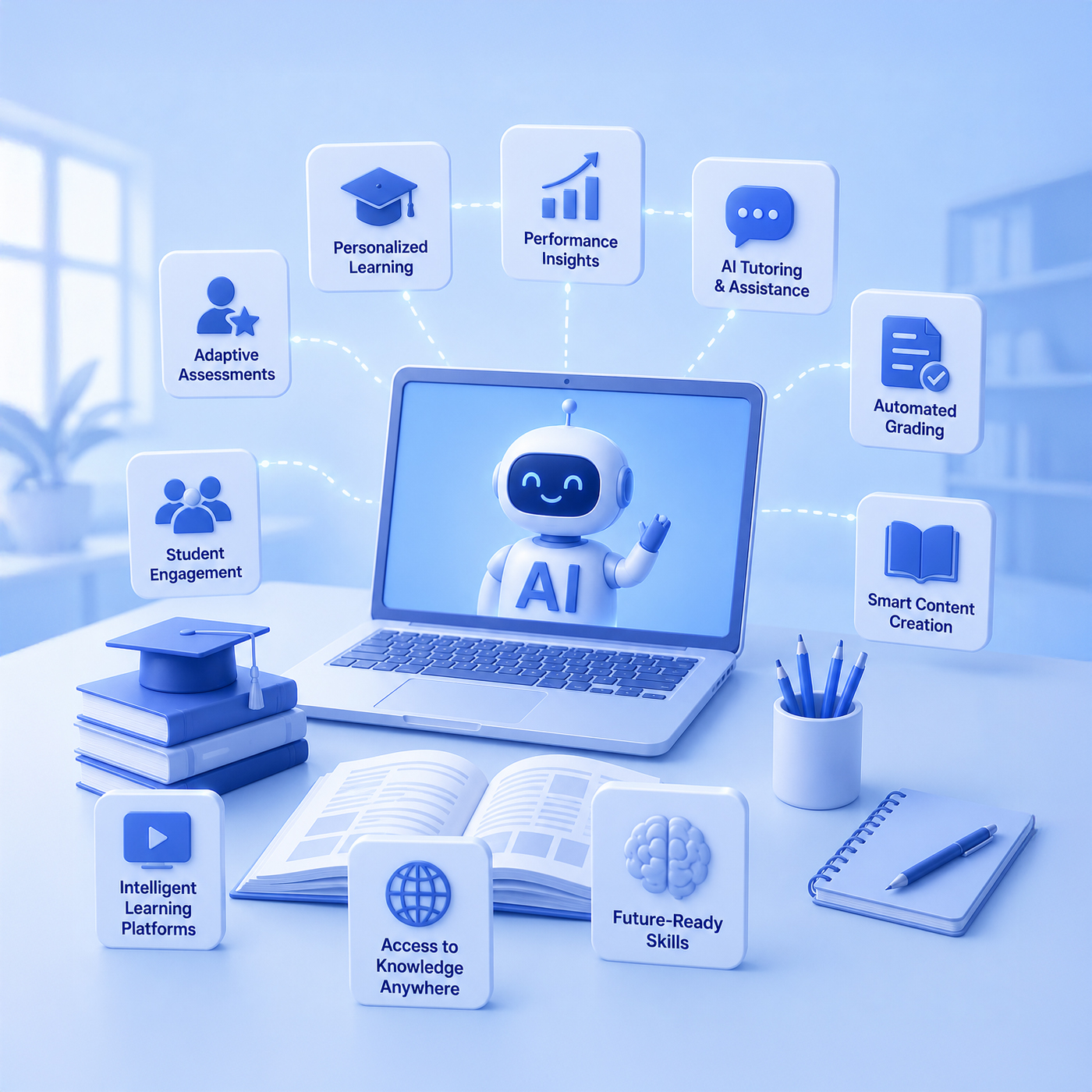
This is where AI in education is creating meaningful value. Artificial intelligence helps educational institutions personalize learning, automate repetitive tasks, improve student support, and generate actionable insights for decision-making.
Most importantly, AI is not a replacement for teachers or administrators—it is a tool that helps them deliver more effective learning experiences and better support student success.
What Is AI in Education?
AI in education refers to the use of artificial intelligence technologies such as machine learning, natural language processing, predictive analytics, recommendation systems, computer vision, and generative AI to support teaching, learning, student engagement, educational administration, and institutional decision-making.
AI helps educators personalize learning experiences, automate routine administrative tasks, provide intelligent feedback, improve accessibility, and support data-driven educational strategies.
Rather than replacing teachers, AI enhances their ability to deliver effective learning experiences, identify student needs earlier, and create more engaging and inclusive educational environments.
Why AI Adoption Is Accelerating in Education
Several trends are driving adoption:
Educational institutions increasingly view AI as a tool for improving both learning outcomes and operational efficiency.
The 10 Ways AI Is Reshaping Learning
1. Personalized Learning Paths
AI adapts content, pacing, and activities to individual learner needs. Students receive more relevant experiences while educators gain insights into learning progress.
2. Intelligent Tutoring Systems
AI-powered tutors provide additional support outside classroom hours. Teachers remain responsible for instruction while AI offers supplemental guidance.
3. Automated Assessment & Feedback
AI assists with grading routine assignments and generating feedback, allowing educators to focus on higher-value teaching activities.
4. Adaptive Learning Platforms
Learning platforms adjust content difficulty based on student performance, helping maintain engagement and progression.
5. Student Success Prediction
AI identifies patterns that may indicate academic risk, helping institutions provide proactive support.
6. AI-Powered Content Creation
Educators can generate quizzes, lesson plans, summaries, and learning materials more efficiently.
7. Accessibility & Inclusive Learning
AI supports captions, translation, transcription, and assistive technologies that improve learning accessibility.
8. Administrative Workflow Automation
Routine administrative processes such as scheduling, reporting, and documentation can be streamlined.
9. Language Learning Support
AI enables conversational practice, pronunciation feedback, and personalized language learning experiences.
10. Learning Analytics & Insights
AI helps educators analyze learning data to improve curriculum design and student support strategies.
AI in Education: Traditional vs AI-Enhanced Learning
| Area | Traditional Approach | AI-Enhanced Approach |
|---|---|---|
| Learning Personalization | One-size-fits-most | Adaptive experiences |
| Student Feedback | Periodic feedback | Continuous feedback |
| Assessment | Manual grading | AI-assisted evaluation |
| Student Support | Reactive support | Predictive support |
| Accessibility | Limited accommodations | Scalable accessibility tools |
| Administrative Workloads | Manual processes | Automated workflows |
| Learning Analytics | Basic reporting | Advanced insights |
Building an AI Strategy for Education
Phase 1: Identify Educational Goals
Define desired learning and operational outcomes.
Phase 2: Assess Data & Technology Readiness
Evaluate systems, infrastructure, and data quality.
Phase 3: Launch Pilot Programs
Start with focused use cases.
Phase 4: Measure Learning Outcomes
Track impact on students and educators.
Phase 5: Scale Responsibly
Expand successful initiatives with governance.
Which Educational Organizations Benefit Most?
K-12 Schools
Personalized learning, student support, and administrative automation.
Higher Education Institutions
Student retention, learning analytics, and operational efficiency.
Corporate Learning & Development
Personalized employee training and skills development.
Online Learning Platforms
Adaptive learning and scalable learner support.
EdTech Companies
Enhanced personalization and product innovation.
Real-World Education AI Example Scenarios
Example 1: Personalized Learning Program
Challenge: Diverse student learning needs.
AI Solution: Adaptive learning platform.
Role of Educators: Monitor progress and provide instruction.
Expected Outcome: More personalized learning experiences.
Example 2: University Student Retention Initiative
Challenge: Identifying at-risk students.
AI Solution: Predictive analytics.
Role of Educators: Deliver interventions.
Expected Outcome: Improved student support.
Example 3: AI-Assisted Content Creation
Challenge: Time-consuming material preparation.
AI Solution: AI-generated learning resources.
Role of Educators: Review and refine content.
Expected Outcome: Faster content development.
Example 4: Accessibility Enhancement Program
Challenge: Supporting diverse learning needs.
AI Solution: Automated captions and transcription.
Role of Educators: Ensure inclusive delivery.
Expected Outcome: Improved accessibility.
Benefits of AI in Education
More Personalized Learning Experiences
Increased Student Engagement
Faster Feedback Cycles
Improved Accessibility
Better Learning Insights
Reduced Administrative Workloads
Scalable Learning Support
Enhanced Decision-Making
These benefits help institutions improve both learner outcomes and operational effectiveness.
Challenges and Risks
Data Privacy Concerns
Student data must be handled responsibly.
Bias in AI Systems
Models require monitoring and validation.
Over-Reliance on Technology
Human judgment remains essential.
Implementation Costs
Technology investments require planning.
Change Management Resistance
Successful adoption requires stakeholder buy-in.
Digital Equity Challenges
Access disparities must be addressed.
Content Accuracy Risks
AI-generated content requires review.
Governance Requirements
Policies and oversight are necessary.
AI Governance in Education
Human Oversight
Educators remain responsible for educational decisions.
Student Privacy
Protect sensitive student information.
Transparency
Clearly communicate AI usage.
Accessibility
Ensure inclusive access to AI tools.
Responsible AI Use
Establish ethical guidelines.
Continuous Evaluation
Monitor outcomes and risks over time.
Measuring AI Success in Education
1. Student Engagement Metrics
Track participation and interaction levels.
2. Learning Outcome Metrics
Measure academic performance improvements.
3. Retention Metrics
Monitor student persistence and completion.
4. Accessibility Metrics
Evaluate inclusion and access.
5. Educator Productivity Metrics
Measure time savings and efficiency.
6. Administrative Efficiency Metrics
Assess operational improvements.
7. Satisfaction Metrics
Track feedback from students and educators.
8. Institutional Performance Metrics
Measure strategic educational outcomes.
Education AI Readiness Assessment Worksheet
Educational Objectives
What learning outcomes are we trying to improve?
Technology Readiness
Are current systems capable of supporting AI initiatives?
Data Availability
Is relevant educational data accessible and reliable?
Educator Readiness
Do educators have the training needed to use AI effectively?
Governance Requirements
What policies and oversight mechanisms are required?
Pilot Opportunities
Which use cases offer the highest potential value?
Success Metrics
How will educational and operational outcomes be measured?
The Future of AI in Education
Future developments are likely to include:
The most successful institutions will combine AI capabilities with strong educational leadership and human expertise.
Frequently Asked Questions
Conclusion
AI is reshaping education by helping institutions deliver more personalized, accessible, and efficient learning experiences. While opportunities continue to expand, successful adoption depends on balancing innovation with governance, transparency, and human oversight.
The most effective educational environments will combine AI-powered insights with the expertise, empathy, and leadership that educators bring to learning.
Scale AI in Education
As educational organizations explore AI opportunities, success depends on aligning technology initiatives with learning objectives, educator needs, and student outcomes.
Kambaa helps schools, universities, EdTech companies, and learning organizations design, implement, govern, and scale AI solutions across personalized learning, educational analytics, intelligent automation, accessibility, student engagement, and digital learning transformation initiatives.